 |
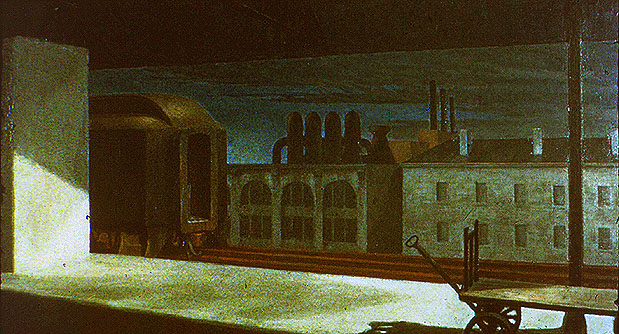
| Edward Hopper, Dawn in Pennsylvania (1942) |
|
|
| Edward Hopper, Dawn in Pennsylvania (1942) |
In his book Invisible Cities Italo Calvino wrote that it is with cities as it is with dreams: "everything imaginable can be dreamed, but even the most unexpected dream conceals a desire or, its reverse, a fear. Cities, like dreams, are made of desires and fears." Few works of the imagination demonstrate Calvino's observation more convincingly than Edward Hopper's city paintings, which are pervaded by longing and dread. Indeed, in an important sense, Hopper's desires and his fears are synonymous.
In the end, the sources of his art are unsearchable, unreachable. His peculiar vision, which avoided everything about the city and yet defined it, could surprise even himself. He said of one of his paintings, one of his hotel paintings in fact: "Lonely? Yes, I guess it's lonelier than I planned it, really" (Gail Levin, Edward Hopper: An Intimate Biography, p. 506).
We end where we began. Hopper was born in one America and grew up in another, witness to the most far-reaching changes in the nation's history. What he included in his pictures, and perhaps even more what he left out, make them an idiosyncratic, unexplainable, but necessary record of the nation's transformation.
 back to title page